- Faster Than Normal
- Posts
- Brunello Cucinelli
Brunello Cucinelli

Alex Brogan
December 28, 2025 • Read Time: 12 minutes

This edition is brought to you by The Last Invention
Good morning to all new and old readers! Here is your Saturday edition of Faster Than Normal, exploring the stories, ideas, and frameworks of the world’s most prolific people and companies—and how you can apply them to build businesses, wealth, and the most important asset of all: yourself.
Today, we’re covering Brunello Cucinelli and his journey from a poor Italian farmer’s son to a fashion billionaire who champions ethics and craftsmanship.
If you enjoy this, feel free to forward along to a friend or colleague who might too. First time reading? Sign up here.
What you’ll learn:
How Brunello Cucinelli built a billion-dollar cashmere brand with heart
Lessons on building a brand around a philosophy, not just products, don't be afraid to go against industry norms and use physical spaces to embody your brand values
Quotes on business philosophy, work-life balance and true wealth
Cheers,
Alex
P.S. Send me feedback on how we can improve. We want to be worthy of your time. I respond to every email.
Brunello Cucinelli
Born in 1953 to a family of farmers in rural Italy, Brunello Cucinelli grew up in a house without electricity or running water. His early years were marked by poverty and manual labor.
"I can still perceive, in the senses, the scent, sounds and lights of the farming life I was born into," Cucinelli recalls.
But even as a young man, Cucinelli had a keen eye for quality and beauty. He was drawn to the world of fashion and saw an opportunity in colorful cashmere sweaters. In 1978, at age 25, he took a leap of faith. He borrowed 500,000 lire (about $550 today) and started his own company.

The early days were tough. Cucinelli had no business experience. No contacts in the fashion world. Just a belief in his product and a willingness to work tirelessly. He went door-to-door to boutiques, trying to convince them to stock his sweaters.
"I was firmly convinced of the idea of producing high-quality garments that reflected Italian craftsmanship and manual skills," Cucinelli says.
Slowly, his persistence paid off. Orders trickled in. Then grew. By the late 1980s, Cucinelli's colorful cashmere was gaining a reputation for quality and style.
But Cucinelli wanted more than just financial success. He was determined to build a company that valued its workers and community. In 1985, he bought a 14th-century castle in the village of Solomeo and made it his company's headquarters. He restored crumbling buildings and created a workplace that felt more like a Renaissance workshop than a modern factory.
"I believe in a form of contemporary Humanistic Capitalism where fair profit is pursued by trying to cause as little harm as possible to Creation and humanity," Cucinelli explains.
This philosophy wasn't always easy to maintain. During the 2008 financial crisis, many luxury brands cut costs and laid off workers. Cucinelli did the opposite. He guaranteed jobs and even raised wages. It was a risky move that paid off in loyalty and quality.
Today, Brunello Cucinelli is a billion-dollar company. In 2023, its revenue surpassed €1.1 billion ($1.2 billion). But more impressive than the financial success is the way Cucinelli has achieved it.
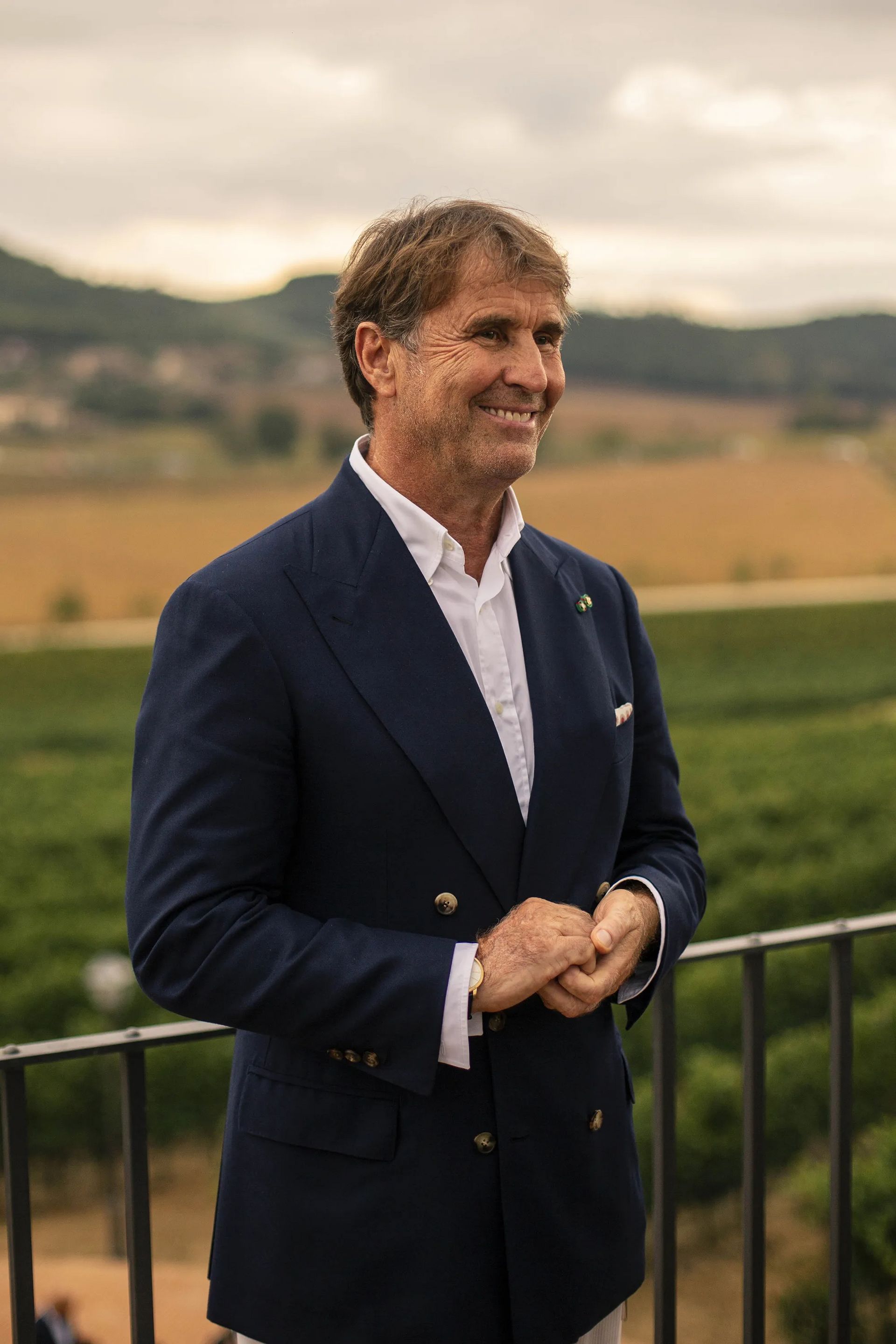
The company pays its workers 20% above market rate. It donates 20% of profits to charity. Employees in Solomeo enjoy amenities like a company library and theater. The workday ends at 5:30 pm sharp.
"There are three things you cannot buy. Fitness: You have to keep fit, whether you're rich or not. Diet: You cannot pay someone to be on a diet for you. I think that diet is the biggest sacrifice in my life. Then, looking after your soul. No one can possibly treat your soul but you yourself," Cucinelli reflects.
Cucinelli's success proves that ethical capitalism isn't just a nice idea - it can be a winning business strategy. By valuing craftsmanship, community, and human dignity, he's built a brand that resonates deeply with consumers seeking quality and meaning.
The farmer's son who once plowed fields behind an ox is now known as the "King of Cashmere." But for Cucinelli, the true measure of success isn't in titles or profits. It's in creating a business that enhances the lives of everyone it touches.
Lessons
Lesson 1: Build a brand around a philosophy, not just products. Cucinelli didn't just create a luxury clothing line. He built an entire ethos around "humanistic capitalism." This philosophy permeates every aspect of his business, from how employees are treated to the restoration of Solomeo. It's not just marketing - it's a core part of the company's identity. "I believe in a form of contemporary Humanistic Capitalism where fair profit is pursued by trying to cause as little harm as possible to Creation and humanity," Cucinelli says. This approach has created a deep emotional connection with customers that goes beyond the products themselves.
Lesson 2: Don't be afraid to go against industry norms. In an industry known for long hours and high-pressure environments, Cucinelli has strict rules about work-life balance. Employees start at 8am and finish at 5:30pm sharp. No work emails on weekends. 90-minute lunch breaks. These policies might seem inefficient, but they've created a loyal, productive workforce and reinforced the brand's values. "Human beings are much more creative in the morning after a good rest and after devoting time to themselves," Cucinelli explains.
Lesson 3: Use physical spaces to embody your brand values. Cucinelli's headquarters in Solomeo isn't just an office - it's a physical manifestation of the company's philosophy. The restored medieval buildings, the company theater, the school for artisans - all of these reinforce the brand's commitment to culture and craftsmanship. As Cucinelli puts it, "Man needs dignity more than bread." These spaces serve as powerful marketing tools, attracting media attention and reinforcing the brand's unique positioning.
Lesson 4: Use ancient wisdom to solve modern problems. Cucinelli is known for his love of philosophy and classical literature. He's applied these timeless ideas to modern business challenges. For example, his concept of "otium" - the Roman idea of productive leisure - informs the company's approach to work-life balance. This unique perspective has helped Cucinelli create innovative solutions that stand out in the fashion industry.
Lesson 5: Use your hometown as a competitive advantage. Most luxury brands are based in fashion capitals like Milan or Paris. Cucinelli chose to stay in Solomeo, a tiny village in Umbria. This decision might seem counterintuitive, but it's become a key part of the brand's story and appeal. The company has invested heavily in restoring and developing Solomeo, turning it into a living showcase of Cucinelli's values. As one 90-year-old resident put it, "Before, this place was a sh*thole, but Mr. Cucinelli has given the place some dignity." This unique location sets Cucinelli apart from competitors and reinforces the brand's authenticity.
When Machines Begin to Think
For years, I’ve studied AI up close—its breakthroughs, its blind spots, and the ways it’s steadily reshaping how we live and work.
I wrote The Last Invention to connect the dots between today’s progress and tomorrow’s possibilities. It’s an exploration of how artificial intelligence might change work, economics, and our understanding of intelligence itself.
If you’re curious about where this all leads, I wrote it to give a clear, human view of the world that’s taking shape.
If you’ve found value in my writing, please consider supporting my work by ordering the ebook on Gumroad or Amazon. I think you’ll genuinely enjoy it.
Brunello Cucinelli Quotes
On business philosophy: "I believe in a form of contemporary Humanistic Capitalism where fair profit is pursued by trying to cause as little harm as possible to Creation and humanity."
On work-life balance: "Human beings are much more creative in the morning after a good rest and after devoting time to themselves."
On true wealth: "Having enough is a form of wealth."
On leadership: "Elevated things love words, deep ones prefer silence."
On long-term thinking: "I have three-year business plans and 30-year business plans but also three-centuries business plans."
On dignity: "Man needs dignity more than bread."
On personal growth: "There are three things you cannot buy: fitness, diet, and looking after your soul."
On values: "The willingness to make sacrifices for others, to be able to wait for a reward, the devotion to work; for me, these are everlasting values."
On entrepreneurial motivation: "I wanted my company to foster the human and economic dignity of human beings. That was the main purpose because I was moved by the tearful eyes of my father."
Speeches
Book Recommendations
Further Readings
That’s all for today, folks. As always, please give me your feedback. Which section is your favourite? What do you want to see more or less of? Other suggestions? Please let me know.
Have a wonderful rest of week, all.
Recommendation Zone
⎯
Build Global Teams, Save Smart
Hiring remote talent has been one of the most impactful decisions I’ve made, supporting everything from marketing and customer support to operations and admin.
I’ve used Athyna, a global talent platform that helps companies quickly hire top professionals from talent-rich regions like Latin America, Southeast Asia, and Africa — often delivering up to 70% cost savings. They move fast (under 5 days), and cover roles across engineering, marketing, design, and ops.
Athyna sources talent from companies like Facebook, Uber, Zoom, and Salesforce, so you’re not sacrificing quality, just unlocking global efficiency. Highly recommend giving them a look.


Why Faster Than Normal? Our mission is to be a friend to the ambitious, a mentor to the becoming, and a partner to the bold. We achieve this by sharing the stories, ideas, and frameworks of the world's most prolific people and companies—and how you can apply them to build businesses, wealth, and the most important asset of all: yourself.
Faster Than Normal is a ‘state' of being’ rather than an outcome. Outlier performance requires continuous, compounded improvement. We’re your partner on this journey.
Send us your feedback and help us continuously improve our content and achieve our mission. We want to hear from you and respond to everyone.
Interested in reaching Founders, Operators, and Investors like you? To become a Faster Than Normal partner, apply here.